Showing posts with label Miami Pine Rocklands Coalition. Show all posts

Wednesday, January 26, 2022

An important environmental post worth repeating: What’s So Special about a 22 Acre Forest on Old Cutler Road, by Eduardo Varona, Guest Post (originally published October 18, 2018)

Is the environmental spirit dead with current elected officials? Why are they willing to spend hundreds of thousands of dollars in the future to "beautify" the median running within US1 (costs that they gladly assumed from FDOT), but not protect environmentally sensitive land? 

Various plans have been proposed. I proposed working with the Miami-Dade Environmentally Endangered Lands Program (EEL) several times. In fact, I worked to get these 22 acres placed on the "B" List for acquisition, but it requires that Palmetto Bay participate.  That would remove any threat of development both on that land or any transferrable rights being applied to adjoining land.  This land has been used as a political football for far too long and I am anxious to see a realistic plan to save this precious land. 

I rely upon experts. The 22 acres of the Palmetto Bay Village Center should be saved. Please see this guest post from 10/18/2018: What’s so special about a 22 acre forest on Old Cutler Rd? 

This forest is very special indeed. It is one of the last remaining remnants of the tropical rockland forest ecosystem that covered Miami-Dade County before we bulldozed 98% of it. Yes there is roughly only 2% left of this forest ecosystem left in all of South Florida. Most of this ecosystem existed almost exclusively in South Miami-Dade. And day by day we lose additional acreage to development and neglect.

Specifically, the 22 acres of the PBVC is a tropical rockland forest composed of rockland hammock and pine rockland. These two forest communities exist on the oolitic limestone ground in a fluid equilibrium with each other as the land can transition back and forth between the two distinct plant communities in a natural and controlled process influenced by fire, hydrology, and by man. The species diversity both plant and animal that this 22 acre forest harbors cannot be measured in dollars. It should not ever be measured in dollars. In fact some years ago, the 22 acres was nominated for inclusion into the County's Environmentally Endangered Lands (EEL) acquisition program. County biologists assessed the site in response and documented the important habitat values. As a result, the Board of County Commissioners added this site to the list of lands that EEL should purchase for management and protection. The land has remained on the list ever since awaiting funding for purchase.

Here is the complete guest post, originally published on October 18, 2018:

Thursday, October 18, 2018

What’s So Special about a 22 Acre Forest on Old Cutler Road, by Eduardo Varona, Guest Post

Many have questioned over the last decade what is the importance of 22 acres of privately owned native forest on the east side of Old Cutler Rd just north of SW 184 St in Palmetto Bay. Some have claimed and said it is a protected forest. The private owner at times has wanted to develop it and at times seems to want to protect it. Politicians have even fallen on their own swords actually proposing to develop it. At times part of the forest was even looked at for a fire station to serve the surrounding neighborhoods. 

In the last four years there has been a serious push to finally give steadfast lasting protections to this forest through a deal between the Village of Palmetto Bay and the private owner, the Palmetto Bay Village Center (PBVC). This agreement would involve a transfer of developmental rights from the 22 acres east to the parcels surrounding the PBVC. And Palmetto Bay would receive the 22 acre forest as the newest passive park in the “Village of Parks”.

So this begs the question, do the 22 acres of forest need protection? Is this privately owned forest currently protected from development now and in the future?

The answer to the second question is a very certain NO. The 22 acres have never been designated a Natural Forest Community (NFC) by the County and therefore are not protected whatsoever under County laws. To have been designated an NFC the private owner could have approached the county and asked for an ecological and biological assessment of the site. This has never happened. Had it happened, due to the relatively well maintained condition of the forest it would most likely have been designated an NFC. However, even if it had been designated an NFC it would only have protected a percentage of it from development, not all of it. 

What about a covenant that allegedly exists or existed that allegedly protects the forest. Well, depending on who you ask and on which side of the bed they woke, there is a covenant of sorts that is enforced by the Village. A covenant that the Village agrees is soon scheduled to expire.

But in actuality that covenant doesn’t protect the forest at all. It only protects the homes across from the forest along Old Cutler Rd by maintaining a “visual buffer” so that those homes can’t see the PBVC building. That is the extent of the covenant which is due to expire in 2019, if you ask the experts. Finally, is there interest by the private owner to develop the forest? Well why wouldn’t there be as it is prime real estate right on old Cutler Rd. If not protected, someday it will be developed.

Now let’s go back to the original question, the title of this writing. What’s so special about a 22 acre forest on Old Cutler Rd? This forest is very special indeed.  It is one of the last remaining remnants of the tropical rockland forest ecosystem that covered Miami-Dade County before we bulldozed 98% of it. Yes there is roughly only 2% left of this forest ecosystem left in all of South Florida. Most of this ecosystem existed almost exclusively in South Miami-Dade. And day by day we lose additional acreage to development and neglect. 

Specifically, the 22 acres of the PBVC is a tropical rockland forest composed of rockland hammock and pine rockland. These two forest communities exist on the oolitic limestone ground in a fluid equilibrium with each other as the land can transition back and forth between the two distinct plant communities in a natural and controlled process influenced by fire, hydrology, and by man. The species diversity both plant and animal that this 22 acre forest harbors cannot be measured in dollars. It should not ever be measured in dollars. In fact some years ago, the 22 acres was nominated for inclusion into the County's Environmentally Endangered Lands (EEL) acquisition program.  County biologists assessed the site in response and documented the important habitat values.  As a result, the Board of County Commissioners added this site to the list of lands that EEL should purchase for management and protection.  The land has remained on the list ever since awaiting funding for purchase.

Roughly half of the 22 acre forest is pine rockland with the rest consisting of an oak hammock also containing trees such as mastic and gumbo limbo. Yet it is a little known fact that pine rockland is a worldwide endangered ecosystem and plant community which only occurs in Cuba, Bahamas, and yes, Miami-Dade County, and only in South Dade. 

There is more that makes this 22 acre forest more unique than other similar parcels in South Dade. This forest is one of the last remnants of a vast coastal forest that existed in a long ecotone where the forest met the South Dade coastal wetlands and then beyond that Biscayne Bay. And there is even more that makes it so special. 


Few understand that all throughout the Miami coastal ridge where now lie the municipalities of Palmetto Bay, Cutler Bay, and Pinecrest there existed transverse glades, also known as finger glades. These transverse glades, traversed the coastal ridge as creeks and fresh water wetlands that in the wet season flowed with fresh water from the Everglades all the way to Biscayne Bay. One very large transverse glade occurred in the area known as Bel Aire in Cutler bay and it ran northeast into Palmetto Bay emptying most of its fresh water into Biscayne Bay at the Deering Estate.  This same transverse glade, now a canal, at one time also fed this 22 acre forest and the coastal wetlands abutting it with a seasonal seepage of subterranean ground water through the porous limestone underfoot. In fact an unusual tree species for this location so close to the coast still lives on the edge of these 22 acres at the spot where it once met the coastal wetlands. The Swamp Bay, a tree in the Avocado family, mainly occurs in the Everglades tree islands and in transverse glades. And that a specimen of this tree still grows on the edge of the 22 acre forest is evidence of the strong Everglades fresh water connection that once existed at the site.

So to come full circle, the 22 acres is significant in of itself as one of the last remnants of a vast tropical rockland coastal forest that once existed but is now mostly gone. However, the last piece of the intricate story is that this 22 acre forest lies right beside the Biscayne Bay Coastal Wetlands (BBCW) restoration project which is an integral component of the Comprehensive Everglades Restoration Plan (CERP). This large scale CERP restoration project is planned to restore many thousands of acres of coastal wetlands and the near-shore adjacent portions of Biscayne Bay.  With the exception of what has already been restored at the Deering Estate, the most northerly component of this large project is the 130 acre restoration parcel purchased by the Water Management District just to the south of the 22 acre forest.  This makes the forest and its protection an effort worthy of local, county, state, national, and international significance.

This precious 22 acre forest if preserved will support and enhance BBCW and the Village of Parks far into the future.

Swamp bay trees that are proof of the connection of this forest to fresh water wetlands.


Thursday, October 22, 2020

Cully Waggoner's open letter to Anyone Who Cares, Note: NOT the Mayor or Commissioners of Miami-Dade County, We Know YOU Don’t Care.

An Open Letter Op Ed To Anyone Who Cares, Note: NOT the Mayor or Commissioners of Miami-Dade County, We Know YOU Don’t Care.
It rained constantly all day today, October 21st, 2020. It made me feel as if Mother Earth was crying over the decision yesterday by the Miami-Dade County Commissioners to Vote FOR Miami Wilds and the continued destruction of the Richmond Pine Rocklands.
One Mayor and 13 Commissioners and ONLY ONE, Commissioner Suarez, voted AGAINST Miami Wilds. I cannot say that I am not surprised by the County’s stupidity. The County often votes in favor of stupid things that do damage to our local environment, so the destruction of unique to only Dade County Pine Rocklands and the decimation to extinction of the Federally Endangered Species that ONLY live on the site for an EIGHTH Water Park in South Florida seems to make sense in Bizzarro World.
I AM surprised however by Commissioner and Mayoral Candidate, Daniella Levine Cava that voted FOR Miami Wilds. I thought SHE was different, NOT another corrupted South Florida politico like the others, I guess I was wrong. Daniella Levine Cava lost my vote for Mayor and lost my support for anything else. She used to be a beacon of hope, now she’s just like every other politician in this Banana Republic.
Commissioner Suarez is unique in that HE CALLED ME personally about this issue a few weeks ago. In the last SIX YEARS I’ve sent several e-mails, and spoken in person before the County Commission at least TWICE and don’t even get an “Auto Responder” e-mail back from most of the County Commissioner, let alone an e-mail reply or a call back. That shows me how little they care about the people of Miami-Dade County that they represent.
As if the debacle of Coral Reef Commons was not enough, the County decided to double down on yet another developer that lost both Sony and 20th Century Fox as major backers of Miami Wilds so they could build yet another mediocre water park and a hotel on County owned land, without public input, , without zoning change notices, without a conservation plan and without a review by the various County departments.
Southern Anchor is County OWNED Land that SHOULD have gone into the EEL (Environmental Endangered Lands) program that Miami-Dade has. NOT given outright to a developer for profit as they were / are for Miami Wilds. In FACT for the last four years there was a push to put “Southern Anchor”, the former U.S. Coast Guard housing site, into EEL and Miami-Dade fumbled and refused to add it to the EEL List, even though the County ALREADY OWNED IT, let that sink it as to how little the Miami-Dade County cares about our environment.
The Miami Herald, a shadow of its former self after selling its property to a developer for a new Casino that has yet to be built because the voters of South Florida vote AGAINST Casinos and gambling unless it is on Native American Indian land and then gambling is not only OK, except it is NOT taxed.
The main issue as I see it is that the Mayor and most of the Miami-Dade Commissioners DON’T CARE about the people of Miami-Dade County. With exceptions, they never have and they never will Remember how THEY voted when YOU Vote, I most certainly will as will others seeing this.
The full time jobs Miami Wilds will create is hardly significant employment, especially since most of them will be far below the $35k average the developer is touting. More dead-end entry-level jobs is not the answer. The “more jobs” promotion that Commissioner Moss keeps pushing is a misleading narrative at best. Moss was tasked with getting a “theme/water park next to MetroZoo (now ZooMiami) way back in 1997, he’s term limited and in his last term as Commissioner Moss wants one last hurrah before he leaves office.
Another favorite excuse for approving Miami Wilds is that it is being built on a Parking Lot. It is already paved over and won’t hurt any more Pine Rockland. Historically speaking, it is being built on the former landing pad for Naval Air Station Richmond, which became the MetroZoo parking lot in 1981. This is not entirely true, but the developers don’t want you to know this.
First: Pine Rocklands do not have to have Pine Trees on them to be considered Pine Rockland
Second: Some of the Richmond Pine Rocklands was paved over for the Navy Blimp base in 1941 and the land, the Pine Rockland beneath the concrete and asphalt is still intact and restorable. In fact, there are remains of two runways on the old base site. Both have pine trees pushing their way up through them. The old incinerator on the base had a tree growing out of the chimney.
Third: The plans for parking wipe out a part of The Gold Coast Railroad Musuem’s South Pad where the rail and “North Pole” for The Polar Express is. There is Pine Rockland with mostly Australian Pine Trees on it with a mix of other endangered flora and fauna that has already been documented and is a DERM concern.
--
Cully Waggoner

Note, Cully Waggoner also serves as a board member of the Miami Pine Rocklands Coalition.


Wednesday, September 23, 2020

Save, don’t pave the 22 acres! Residents, the original village council and I agree with the representatives of the Palmetto Bay Village Center – we all want the 22 acres to be permanently preserved. Protection needs to be by covenant, for 50 years plus, not a mere development order. An important read for anyone concerned with protecting the environment.

Why a covenant? Because a development order could be modified by a simple majority vote of this or any future mayor and council.  We need real environmental protection of 22 acres at the Palmetto Bay Village Center (PBVC).

This is one time when the applicant is right and the current Palmetto Bay Mayor and Council are WRONG.

Please take the time to review the concerns outlined by Sara Barli Herald, Esq., Bilzin Sumberg Baena Price & Axelrod, LLP. In the 4 page letter of September 16, 2020: 

This goal is entirely consistent with the actions of the Village Counsel and opinions voiced at public hearings in 2016. We believe, therefore, that the Declaration as drafted and approved by our client (a copy of which is attached) is necessary to protect and conserve this land for the benefit of future generations.

The attorney for the PBVC went on to state that they take issue with Palmetto Bay officials, who, through their Village Attorney:

… eliminated the majority of the environmental protections included in the draft Declaration that we had submitted to you. Instead, you placed on the agenda a stripped down version that completely disregards the environmentally sensitive aspects of the site. The following very important recitals, restrictions and provisions were stricken by you:

·       County Resolution R-469-08 adding the property to the Environmentally Endangered Lands ("EEL") Program Priority B Acquisition List

·       Village Resolutions 09-11 and 2017-53 affirming and reaffirming support for EEL decision and acquisition of site

·       Excerpt from County Home Rule Charter Section 7.01 pertaining to properties acquired for preservation and acknowledgment of requirements of Charter

·       Definition of "Passive Park"

·       Provision that restrictions shall be perpetual

·       Restriction limiting passive trails to pedestrians and non-motorized vehicles

·       Provision that a structure shall be ancillary to the passive park and limited in size

·       Provisions containing parking areas to designated locations

·       Prohibition against commercial signage

·       Designating residents and property owners of the Village as beneficiaries of the Declaration with rights of enforcement

 As a result, you have created a document with no teeth. Although you retained statements that environmental assets and natural landscape shall be preserved, those statements are aspirational only. With no designated beneficiaries and no enforcement mechanism, the Village will be at liberty to build with impunity whatever structures, roads or parking lots it may desire on environmentally sensitive land.

The entire excerpt above was taken from page 3 (of the 4 page letter).  CLICK HERE to view the correspondence of Sara Barli Herald, Esq., Bilzin Sumberg Baena Price & Axelrod, LLP., of September 16, 2020

You really must read this entire letter.

Friday, September 18, 2020

Protecting the 22 acres. The Palmetto Bay Village Center (PBVC) offers up a detailed 50 year covenant to protect the 22 acres of precious environmentally sensitive land. Palmetto Bay officials object. Why? A very important read. My opinions included.

An insight as to why things are in Palmetto Bay.

Why does it appear that the owners of the Palmetto Bay Village Center (PBVC) are more concerned about protecting these 22 acres than our current Village officials (Council Member David Singer excluded as he has been on record as working to protect these 22 acres).  

The PBVC is working toward completing long term work to deed over these 22 acres; land that was designated as environmentally endangered by Miami-Dade County in 2008 [at the request of the original mayor (me) and village council], a designation supported by Biscayne National Park. In 2009 and again in 2017 the Village expressed continued support for public acquisition of this precious land. Quite frankly many of the current elected officials have played so many divisive political games with this property, that I believe they have boxed themselves in and don’t know who to resolve this issue.

Regardless, of the games, the PBVC may be nearing the finish line regarding protection of this land; however, opposition appears to be rearing its ugly head in a passive aggressive manner.  I provide links to read in full the complete 5 page DECLARATION OF COVENANTS, CONDITIONS, AND RESTRICTIONS, (CLICK HERE) prepared by: Sara Barli Herald, Esq., Bilzin Sumberg Baena Price & Axelrod, LLP. As well as a 4 page letter from Sara Barli Herald, Esq. (CLICK HERE) You should read them so the parties involved cannot allege that anything is being misquoted (as they so often like to do).

Why do so many ongoing issues involving the Current Mayor and Council appear to be a knife fight rather than rational conversations held in public? I include the following in these examples: LUXCOM, the DUV, litigation against Miami-Dade County (Over a 4 way stop) and now the PBVC, Why can’t we engage in protecting our environment without making it appear that Rock Pinelands is a bad idea (maybe protecting Pinelands are a ‘Liberal’ issue for them).

My takeaway, my opinion, is to question why it appears that they believe that this proposed Declaration “does not need to exist”? I believe that it certainly does, especially under the conditions provided and especially for the term of 50 years (if not even 100 or in perpetuity unless and until it would be modified by a 75 percent vote of the village electors, again after the initial 50 year term). I quote from this letter from Counsel for the PBVC (dated 9/16/2020) where in the statement is made, top of page 2, that:

“You made it very clear at the September 1 public hearing that you think that the proposed Declaration does not need to exist.”

Attorneys for the PBVC continue to make clear that it is their position that:

“The property that our client intends to donate to the Village (the "Donation Site") includes mangroves, pines and hammocks that are prized for their beneficial wildlife usage and biological diversity. Substantial portions of the Donation Site were designated as environmentally endangered by Miami-Dade County in 2008, a designation supported by Biscayne National Park. In 2009 and again in 2017 the Village expressed continued support for public acquisition of this precious land, contingent upon securing a small portion of the Donation Site for use as a fire station.”

I wholeheartedly agree. And that is why I have worked since this village incorporated to obtain this land to be held by the public, to maintain it (for all the reasons stated in the Declaration of Covenants prepared by Sara Barli Herald, Esq.)

The entire four (4) page letter should be carefully read in its entirety as it provides a recital of the ongoing history of efforts to obtain and preserve this land. I am proud that I have participated from inception and have been a large part of this effort as were so many others, unfortunately none of those who currently sit on the council have any institutional knowledge or prior involvement other than (for some) their work to undermine and frustrate the efforts to pull this property off the development list and protect these 22 acres for our future generations.

A prior mayor, (not me!) once even sponsored legislation to allow development of these 22 acres. This was a proposal to build houses in these very 22 acres, deferring only temporary (until the process ended with the 2014 election).  Factual information can be found online - See the 7/22/2014 article, Palmetto Bay council defers old Burger King property zoning; approves Palmer Trinity’s site-plan changes, by Lola Duffort.  

 Please read the complete 5 page document, the DECLARATION OF COVENANTS, CONDITIONS, AND RESTRICTIONS, prepared by: Sara Barli Herald, Esq., Bilzin Sumberg Baena Price & Axelrod, LLP.

It is my opinion that the follow restrictive covenants are critical! So why do Village Officials appear to be refusing to provide for these very important protections? Number 8 is critical in that it states that this is intended to benefit and run in favor of the residents and property owners of the Village and (best of all) they (we, the people) shall have the right to enforce, all restrictions, conditions and covenants imposed by the provisions of this Declaration. (all emphasis added)

The Covenants protect this property for a 50 year period. It is also a comprehensive, well-reasoned covenant, not merely a “visual barrier”.

My closing plea: It is time to close this chapter in Palmetto Bay politics. I realize that some will lose the very political football that they have enjoyed employing, but it is time for leadership, political maturity and bring an end to these 22 acres – for at least the next 50 years!

The residents of Palmetto Bay need this covenant. And residents should demand an additional requirement that forbids a modification of the covenant unless approved by a super majority of the residents. A zoning development order sounds nice, but can be easily set aside by a 3-2 vote of the village council. A covenant needs to be put in place.

Follow ‘read more’ to view items with more specificity. I have set out the main covenants. I remain insistent that you read the entire 5 page document.

Wednesday, May 29, 2019

Thursday, May 30, 2019 - 7:00 PM. Save the Pine Rocklands. Meeting in South Miami - special guest State Sen. Annette Taddeo scheduled to appear

Please plan on attending on Thursday, May 30, 7:00 PM.

"Save it, Don't Pave it". Please attend the Pine Rocklands' Coalition Meeting Thursday Night (May 30, 2019) at 7:00 PM in South Miami's Tropical Audubon Doc Thomas House off Sunset and SW 55th Avenue: 5530 Sunset Dr, Miami, FL 33143

We'll have an update on the current state lawsuit, and a special appearance scheduled by State Sen. Annette Taddeo who represents the Pine Rocklands' District in the Fla. Senate.
CLICK HERE to view the Facebook page for the Miami Pine Rocklands Coalition

Prior Relevant posts on my blog relating to the Miami Pine Rocklands Coalition can be found by CLICKING THIS LINK.

Wednesday, March 13, 2019

Update: FPL is working with Miami-Dade County DERM and has pulled a NFC Permit (photos and copy of permit provided)

Work is ongoing as of Wednesday, March 13, 2019.  FPL sought and received a NFC Removal Permit issued 2-05-2019 (CLICK HERE to download and view).

Why is this important to me? See a guest post of October 18, 2018, What’s So Special about a 22 Acre Forest on Old Cutler Road, by Eduardo Varona.

This strand of Pine Rockland is part of the less than 2% of Pine Rockland habitat remaining in Miami-Dade County. It is of the utmost importance that we should be working to preserve and protect what little is left of it. We need everyone to join the fight to protect the remaining Pine Rocklands. 

I am providing some photos of the FPL work.  My understanding is that these new poles will reduce the foot print of the power poles within the Ludlum Pineland Preserve (actually part of FPL property as indicated on some of the signs that are posted throughout this area).


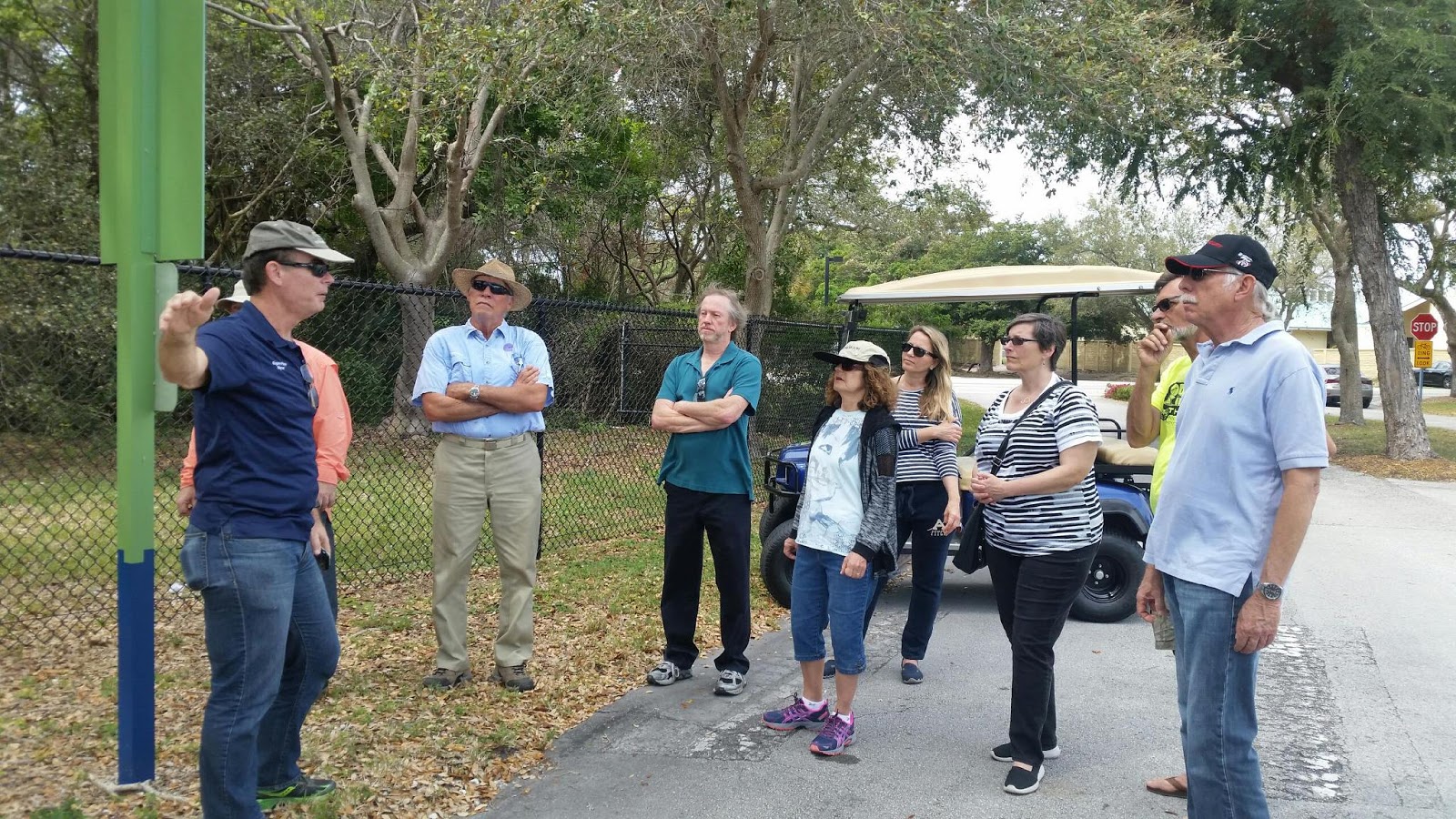
The Ludlum Pineland Preserved is a usual stop for the annual Palmetto Bay Earth Week family bike ride (3 photos from 2 past events posted below) where the ride group stops to gather, catch up and reflect upon the beauty / need to protect the few remaining strands of Pine Rocklands.


Thursday, April 26, 2018

"Twenty-two acres of preserved pine rockland, protected from future development, is extremely significant for endangered animals that are being pushed out of their primary habitat." - Al Sunshine, President of the Miami Pine Rocklands Coalition, Inc.

What is important? Read the Miami Pine Rocklands Coalition information: http://savethepinerocklands.org/
Florida’s pine rocklands are some of the most imperiled lands in the world. They are characterized by limestone rock outcroppings with a low understory of tropical and temperate shrubs, palms, vines, grasses and herbaceous wildflowers — as well as a single species of overstory tree, the slash pine. With very little soil substrate and a dependence on fire, these ecosystems are among the world’s rarest forests, occurring only in South Florida and the Bahamas. They once spanned 185,000 acres of Miami-Dade County, but now — thanks to rampant development — just 2 percent of those lands remain outside Everglades National Park. Florida’s pine rocklands are now regarded as critically imperiled globally, and the plants and animals that rely on them are extremely rare. 
A slim majority, 3 out of 5 members, of the Palmetto Bay Village Council are working to protect the valued pinelands located within our municipality and reduce traffic.  Council Member David Singer issued a press released on Wednesday, 4/25/2018, further clarifying council action taken to date (See below):


A Clarifying Ordinance that Reduces Density & Traffic while preserving 22+/- acres of endangered pine rockland in Palmetto Bay secures majority vote
Councilmember David Singer’s proposed revision to the 2016 zoning of Palmetto Bay Village Center from 485 to 389 units secured the first of three votes to become law

April 25, 2018 – Palmetto Bay, FL – A majority of The Village of Palmetto Bay’s Councilmembers voted to revise a 2016 amendment that reduced density, traffic and saved 22+/- acres of endangered pine rockland from future development. This vote, supported by Palmetto Bay Mayor Eugene Flinn, and Council Members David Singer, Seat 2, and Larissa Siegel Lara, Seat 3, marks the first of three necessary to have this revision to become law; the remaining two votes will take place in the coming months. 

In 2008, the land was zoned for the development of 100 condos, 300 senior housing units, and a hotel, but didn’t protect the 22 acres of pine Rockland. In 2016, Palmetto Bay Vice Mayor John Dubois submitted a repeal to the ordinance that would have reverted the land back to the 2008 ordinance. This repeal would have allowed 485 units, the rights to building a hotel and would have expo­­­­­sed the pine rocklands to development.

At a March 19, 2018, Palmetto Bay Council Meeting, Singer sponsored a clarifying revision to the 2016 ordinance that protected the pine rocklands and capped traffic on Old Cutler Road based on a traffic study to 2,116 trips per day, limiting the development to 389 units. If the repeal had occurred, the daily trips would have exceeded 2,550 trips per day. Additionally, the clarifying revision included a reduction of density in the Village Mixed Use (VMU) area by 96 units (485 to 389) and the creation of a park within the span of 22+/- acres of endangered pine Rockland bordering Old Cutler Road.

“I’m glad that the majority of the Council agreed with me and voted to reduce density and traffic on Old Cutler Road and preserve vitally sensitive pine Rockland,” said Singer.

Pine rockland is a rare type of forest found only in South Florida and the Caribbean, and the latest U.S. Geological Survey (USGS) cites that Miami’s remaining pine rockland is down to 1.3+/- percent of its original 186,000-acre forest. “We are very happy that lawmakers in Palmetto Bay have taken the preliminary step to preserve the critically needed vanishing habitats of pine rockland in South Florida,” said Al Sunshine, President of the Miami Pine Rocklands Coalition, Inc., a Florida non-profit corporation. “Twenty-two acres of preserved pine rockland, protected from future development, is extremely significant for endangered animals that are being pushed out of their primary habitat.”

 -----------------------------------------
 
Photo right: Palmetto Bay's Earth Week 2018 included the annual community bike ride.  One stop occurs at the Ludlum Pineland Preserve in Palmetto Bay where a presentation is held regarding the importance of the Pine Rocklands.

CLICK HERE to view additional blog posts concerning Pine Rocklands


Photo immediately above taken on Nov. 5, 2016, while working at a Pinelands Clean up at Coral Reef Park: Al Sunshine & Belen Valladares, both board members, 
representing The Miami Pine Rockland Coalition, Daniel Mateo, Principal, 
BIOTECH, Susan Windmiller, President, League of Women Voters, Miami-Dade 
County, and Orestes Mayo, BIOTECH school